
Gravel vs. Asphalt vs. Concrete: Which Driveway Material Is Best for You?
- Jan 19
- 2 min read
Choosing the right material for your driveway is one of the most important decisions a homeowner can make. Your driveway affects your home’s curb appeal, maintenance costs, long-term durability, and even property value. With several options available, it can be challenging to decide which surface is the best fit for your needs and budget. To help you make an informed decision, here’s a comparison of the three most common driveway materials—gravel, asphalt, and concrete—along with their advantages, drawbacks, and overall value.
Gravel Driveways
Gravel is one of the most cost-effective driveway options on the market. Installation is fast,
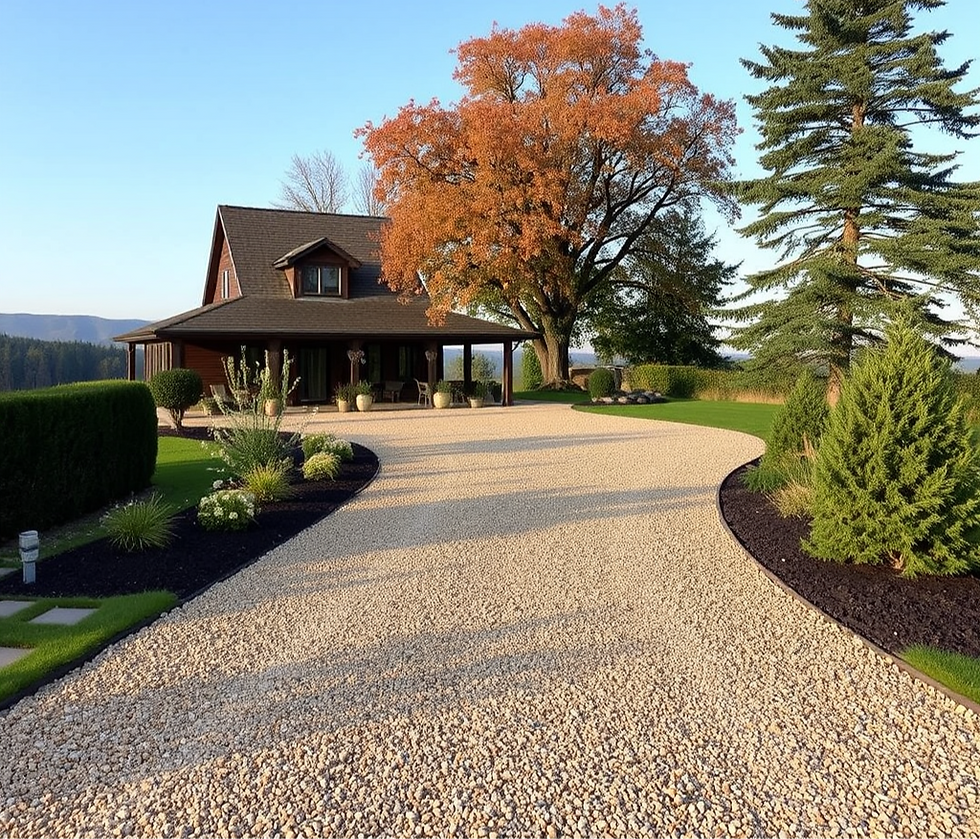
materials are inexpensive, and repairs are simple. Gravel offers a rustic appearance that blends nicely with rural or wooded properties, making it a popular choice for long driveways or large properties in eastern Idaho and Wyoming. However, gravel does require ongoing maintenance. Over time, ruts can develop from vehicle traffic, and heavy rain or snow can wash the stones out of place. Homeowners often need to regrade the driveway and add new gravel periodically. Gravel also isn't ideal for areas where snow removal is frequent, as plows tend to push the rocks aside.
Best for: Budget‑conscious homeowners, rural areas, long driveways.
Not ideal for: Urban or suburban neighborhoods seeking a polished look.
Asphalt Driveways

Asphalt is a step up in both durability and aesthetics. It provides a smooth, clean appearance. Asphalt generally costs more than gravel but significantly less than concrete. Asphalt driveways do require periodic sealing—usually every two to five years—to protect the surface and extend its lifespan. With proper care, an asphalt driveway can last 15–30 years. The dark finish also helps melt snow faster in winter, making it easier to maintain during the colder months that we experience in eastern Idaho and Wyoming.
Best for: Homeowners seeking an affordable, durable, low‑maintenance surface.
Not ideal for: Extremely hot climates where asphalt may soften.
Concrete Driveways
Concrete is known for its longevity, strength, and attractive finish. It can be customized with

color, texture, and decorative patterns, making it a premium choice for homeowners who want a high-end appearance. Concrete driveways typically last 30–40 years or more with minimal maintenance. The downside is cost—concrete is usually the most expensive option. It is also more prone to cracking in cold climates unless professionally installed with proper control joints and ground preparation. Repairs can be more visible compared to asphalt.
Best for: Long‑term durability, high curb appeal, customizable designs.
Not ideal for: Tight budgets or properties with unstable soil.
So Which Material Is Right for You?
The best driveway material depends on your priorities—budget, appearance, maintenance, and climate. Gravel is economical, asphalt offers a balance of cost and performance, and concrete provides superior longevity and a premium look. If you’re unsure which option fits your home best, Avail Valley Construction is here to help. We specialize in driveway installation across Eastern Idaho and Star Valley Wyoming, offering expert guidance and high-quality workmanship to ensure your driveway lasts for years to come.


Comments